






Roadway preservation costs: rejuvenation vs. micro-surfacing vs. mill-and-resurface, per centerline mile
What it actually costs to keep a 24-foot roadway in service for 24 years — three preservation strategies compared on annualized cost per centerline mile, and why the lightest treatment on the most frequent cycle wins the budget.
A commercial parking lot gets budgeted by the square yard. A public road gets budgeted by the centerline mile — and almost always by the year, because whoever signs off on it is working against an annual appropriation, not a one-time capital project. That single difference changes which pavement strategy actually wins.
This is the roadway companion to our commercial lifecycle cost analysis. The framing is the same — compare what each option costs per year of service, not what it costs on the day the crew shows up — but the unit is a mile of road, and the alternatives are the ones a public-works director or an HOA road committee actually weighs: rejuvenation, micro-surfacing, and a 2-inch mill-and-resurface.
How to read a roadway preservation budget
The table below models a 24-foot-wide travel surface (14,080 square yards per centerline mile) over a roughly 24-year evaluation period — a planning window most agencies can defend for a road with a sound base underneath it. A few conventions make the numbers comparable:
- Cost per centerline mile is the all-in cost of every application a strategy requires across the full 24 years, priced in today’s dollars — each total is the simple sum of that strategy’s passes at current rates.
- Annualized cost divides each strategy’s total by the years of pavement service its passes deliver — 20 for rejuvenation (five four-year passes), 18 for micro-surfacing (three six-year passes), 24 for a mill-and-resurface (two twelve-year lifts). It’s the number that belongs in an annual budget conversation, and it’s the only honest way to compare a treatment you repeat every few years against one you do twice in two decades.
- Useful service life here refers to surface behavior — oxidation, raveling, surface cracking — on a road whose base and sub-base are still structurally sound. None of these strategies fixes a failed base; that’s reconstruction, and it’s a different budget.
- Unit costs reflect roadway scale. A continuous mile of road spreads mobilization and setup across far more square yards than a single parking lot, which is what keeps network-scale rates predictable across a whole system — the same treatments, priced for network-scale work.
| Strategy | Unit cost / SY | Applied in years | Cost / centerline mile (24 yr) | Annualized |
|---|---|---|---|---|
| Crack filling | companion — see below | as cracks open | — | — |
| Rejuvenation | $1.50–$3.00 (avg $2.25) | 4, 8, 12, 16, 20 | $158,400 | $7,920 |
| Micro-surfacing | $4.20–$5.50 (avg $5.00) | 6, 13, 19 | $211,200 | $11,733.33 |
| 2″ mill & re-surface | $20.25–$30.00 (avg $25) | 12, 23 | $704,000 | $29,333.33 |
Modeled for a 24-foot-wide travel surface (14,080 square yards) over a ~24-year evaluation period, in today’s dollars. Useful service life reflects surface behavior on a structurally sound base; it does not account for base or sub-base failure.
The four lines — and why one of them is blank
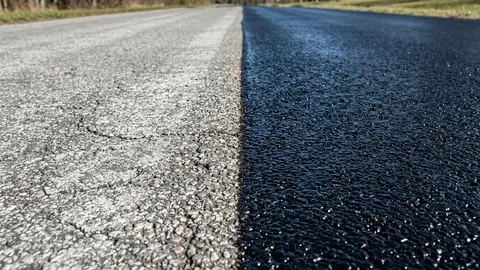
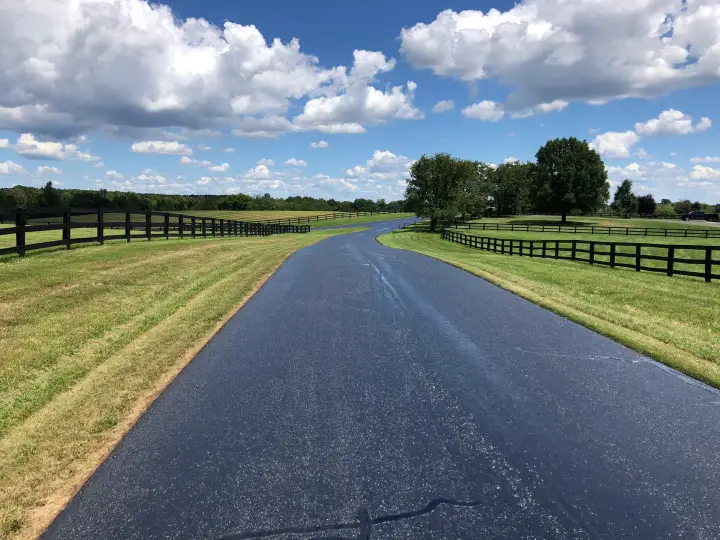
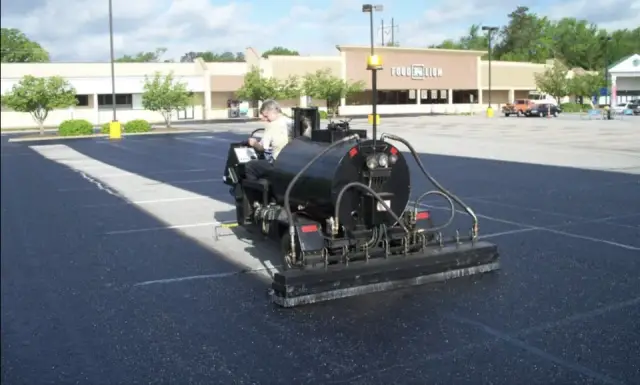
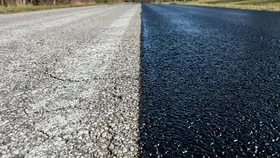
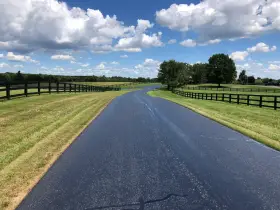
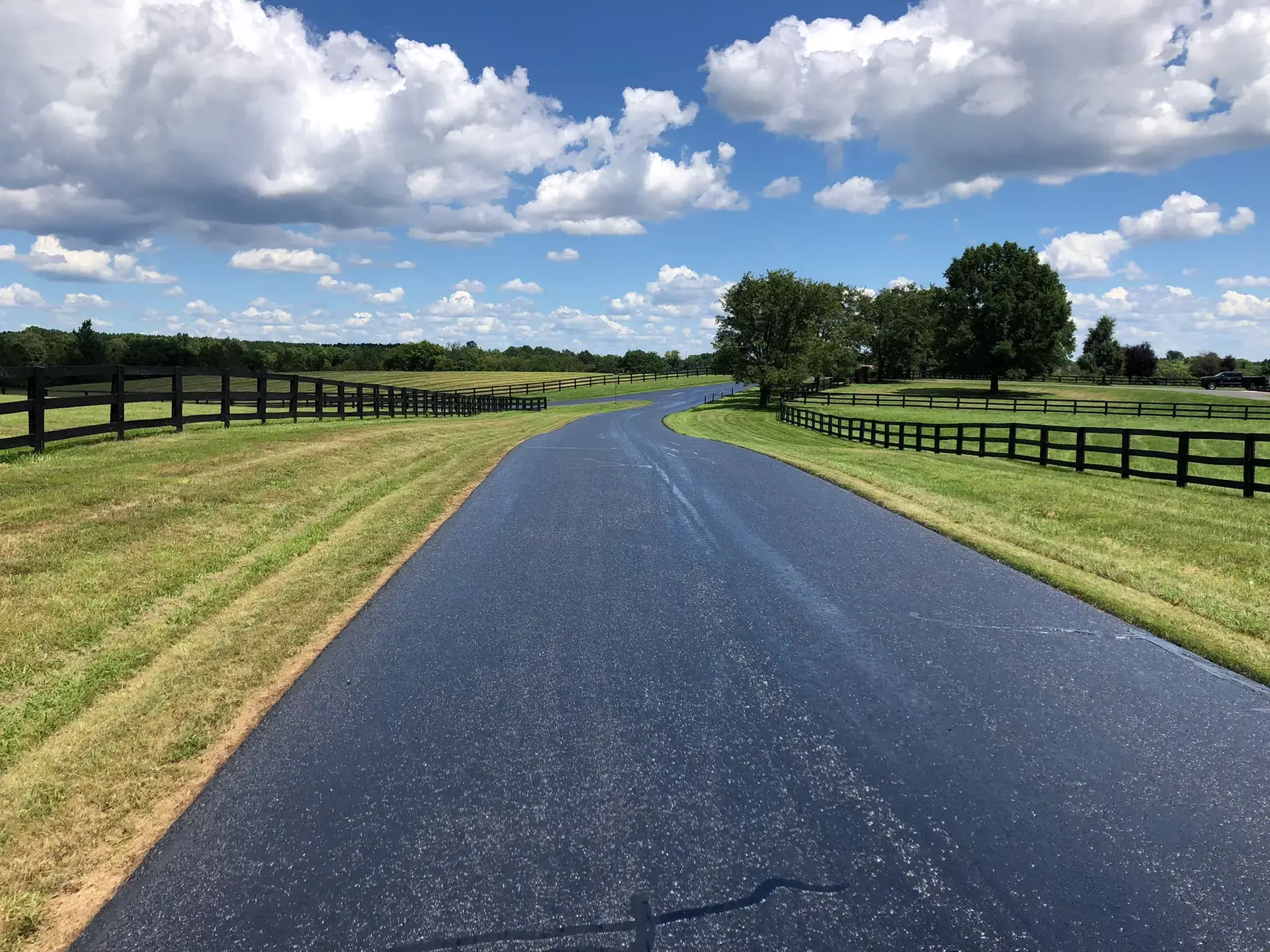
Rejuvenation is the lightest touch and the most frequent. A penetrating rejuvenator is sprayed onto the wearing surface, soaks in from three-eighths of an inch to a half inch, and restores the binder flexibility that oxidation uses up first. At an average of $2.25 a square yard with a same-day return to traffic, it’s cheap enough to repeat on a tight cycle — years 4, 8, 12, 16, and 20 in this model — which is exactly why it wins. For most roadway work we lead with Revolution BLACK™, the flagship 100% black plant-based treatment we apply; Delta Mist®, the clear plant-based option, does the same job where an owner prefers it, and CPR™ covers specs that call for the traffic-grade coal-tar chemistry.
Micro-surfacing is a heavier resurfacing step — a polymer-modified emulsion mixed with fine aggregate, water, and additives and spread as a thin new wearing course. It restores skid resistance and seals the surface, and it’s a legitimate tool as a pavement ages (years 6, 13, and 19 here). At about $5.00 a square yard it’s more than twice the cost of a rejuvenation pass, and because it adds material rather than restoring binder, it doesn’t reset the oxidation clock the way rejuvenation does.
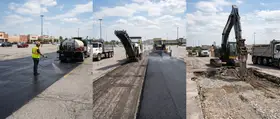
A 2-inch mill-and-resurface is the heavy, conventional move: grind off the top two inches of asphalt, haul it away, and lay a new lift. Done at year 12 and again at year 23, it keeps the road in service — but at about $25 a square yard per pass, it’s the most expensive line on the board by a wide margin, and every pass means lane closures, traffic control, and trucking.
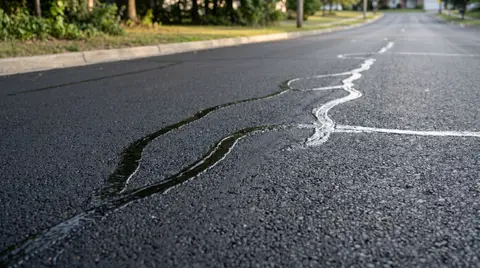
Crack filling is the line with no annualized figure of its own — and that’s deliberate, not an omission. Crack filling isn’t a fourth alternative; it’s the companion that protects whichever strategy you pick. Sealing working cracks before water reaches the base is what keeps a surface-only problem from becoming a base-failure problem — the event that invalidates every number in the table. We fold it into every road we maintain, on the condition of the cracks rather than a fixed interval — new joints get treated as they open, and older work gets re-treated once it has aged out. The crack-sealing-versus-filling distinction is worth its own read.
Why the lightest treatment wins the budget
Here’s the result the model is built to show, in round numbers per centerline mile per year:
- Rejuvenation cycle: ~$7,900
- Micro-surfacing cycle: ~$11,700
- Mill-and-resurface cycle: ~$29,300
A rejuvenation-led program costs roughly 73% less per year than mill-and-resurface — a saving of about $21,413 per centerline mile per year — and about 32.5% less than micro-surfacing (roughly $3,813 a year). Micro-surfacing itself runs about 60% less than mill-and-resurface. All of that on the same mile of road, with each cost annualized over the years of pavement life its own treatment cycle delivers. That’s not because rejuvenation does more. It’s because it does less, more often, on the layer that’s actually aging. Asphalt fails from the top down as the binder’s light, oily fractions oxidize away. Intervene early and often with a rejuvenator and you reset that reaction for a few thousand dollars a year per mile, without ever disturbing the structure underneath. Wait until the surface is spent and your only options are the expensive ones — micro-surfacing or milling — which buy life by adding material instead of restoring it.
The shape of the spending sharpens the point as much as the totals do. The mill-and-resurface strategy concentrates two enormous costs into two budget years; the rejuvenation strategy spreads small, predictable costs across the whole window. In an annual-appropriation world, predictable-and-small beats lumpy-and-large almost every time it comes up for a vote.
When preservation isn’t the answer
The honest caveat — the same one we put on every commercial assessment: none of this saves a road whose base has failed. Alligator cracking through the full depth, deep rutting, pumping at the joints, drainage that’s breaking the section apart — once you see those, no surface treatment is the answer, and a contractor spraying rejuvenator over a failed base is taking your money for a problem the chemistry can’t touch. That road needs reconstruction, which sits off this table entirely because it’s a structural project, not a preservation one.
On almost every real network, the answer is mixed: rejuvenate the miles that are oxidized-but-sound on a tight cycle, micro-surface or mill the few segments that have genuinely spent their surface, reconstruct the short stretches with real base failure, and crack-seal all of it on a schedule. The budget that comes out of that mix is the smallest one you can defensibly put in front of a board — and it’s the one that keeps the most miles out of the reconstruction column the longest.
Putting it against your own network
These are modeled figures for a representative 24-foot mile; your roads will move with width, traffic, climate, and the spec of any individual segment. What we’ll do, on request, is run this same table against your actual centerline miles and condition data — and tell you, in writing, which segments are rejuvenation candidates, which need a heavier step, and which are already past the point where preservation pencils out. Our municipal work includes the City of Fairfax, and every segment is built to the governing specification its owner or agency sets.
Short answers to the follow-up questions.
- What's a centerline mile, and why budget a road by it?
- A centerline mile is one mile measured down the center of a road, regardless of how many lanes it has — so a mile of two-lane road and a mile of four-lane road are both "one centerline mile," priced for their actual width (here, 24 feet). Agencies budget this way because their networks are inventoried in centerline miles and their funding is appropriated against them. It's the unit that lets you compare your whole system on one line.
- Why does the rejuvenation schedule call for five applications (years 4, 8, 12, 16, 20)?
- Because that's the whole point of it. Rejuvenation is inexpensive and same-day, so the winning move is to repeat it on a tight four-year cycle and keep the binder from ever fully oxidizing — rather than wait for the surface to fail and pay for a heavy resurfacing. Five light passes across the first 20 years cost a fraction of a single mill-and-resurface, and they keep the road in sound-surface condition the entire time.
- Is micro-surfacing better than rejuvenation?
- It's heavier and more expensive, not automatically better. Micro-surfacing adds a thin new wearing course — good for restoring skid resistance and sealing a surface that's further gone. But it doesn't restore the binder chemistry the way rejuvenation does, and at more than twice the per-square-yard cost it's a tool for later in the pavement's life, not a replacement for an early rejuvenation cycle. The two are complementary: rejuvenate early and often, micro-surface when the surface genuinely needs new material.
- Does this apply to HOA and private roads, or only public roadways?
- Both. The centerline-mile framing comes from public-works budgeting, but the economics are identical for an HOA road network or a private campus — community-owned roads where reconstruction blows through reserve budgets are exactly where a rejuvenation cycle does the most good. The only things that change are the size of the network and who signs the appropriation.
- Why is the crack-fill row blank — is that a mistake?
- No — it's intentional. Crack filling isn't an alternative to the other three strategies; it's the companion that protects whichever one you choose, by keeping water out of the base before a surface problem becomes a structural one. It runs alongside every strategy on the table rather than competing with them, so it doesn't carry its own annualized "strategy" cost here.
- When is a mill-and-resurface the right call instead of preservation?
- When the surface is genuinely spent — not just oxidized, but raveling, cracking, and no longer holding binder — and you've already gotten what you can out of lighter treatments. Mill-and-resurface is the most expensive line in the model, but it's the right one when there's real surface material to remove and replace. If the base has failed, though, even a mill-and-resurface is the wrong call: that's reconstruction, and no resurfacing will hold over a broken section.
More from the Insights desk.
- Honest comparison
Asphalt rejuvenator vs seal coat
Sealcoating is a surface film. Rejuvenation treats the aging itself. A sourced side-by-side — what each does, what the record shows, and what the law changed.
Read the piece - Lifecycle economics
Pavement lifecycle cost analysis: rejuvenation vs. mill-and-overlay vs. full reconstruction
A 20-year, cost-per-square-yard breakdown of the three pavement paths most facility managers face — and why the cheapest option on day one is rarely the cheapest one by year ten.
Read the piece
The page version is the abstract.
Your lot is the specific.
A free site walk, a one-sheet report, and a straight recommendation — rejuvenation, sealing, overlay, reconstruction, or "not yet." We tell you which, even when the honest answer costs us the sale.