







Shopping centers.
Shopping-center asset managers, regional property managers, and on-site general managers — buyers whose lots can't close, whose anchors receive freight around the clock, and whose accessibility striping has to survive an audit.
A shopping center is the hardest pavement we work on — not technically, but logistically. The lot is the front door, it can’t close, the anchors receive freight around the clock, the inline tenants open at ten, and ownership is watching both the appearance and the capital line. Get the engineering right and you’ve solved the easy part. The job is delivering it without anyone noticing it happened.
Who hires us at shopping centers
Usually a shopping-center asset manager or a regional property manager running the center for an owner or a REIT, sometimes working through an on-site general manager who lives with the day-to-day. Their pavement problem has three layers: a safety and liability layer (trip hazards, faded ADA striping, a fire lane that’s gone invisible), an appearance layer (a gray, raveling lot reads as a neglected center to every shopper and every prospective tenant), and a capital layer (a 20-year-old center was paved all at once and is aging all at once, and the mill-and-overlay number is enormous). They need a contractor who can address all three on a schedule that never closes the center during business hours.
What we do for shopping centers
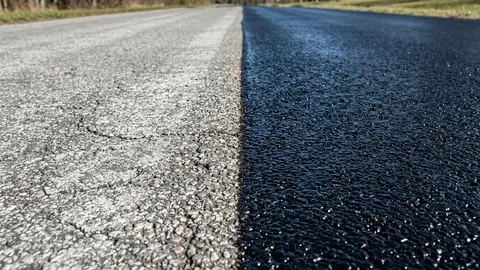
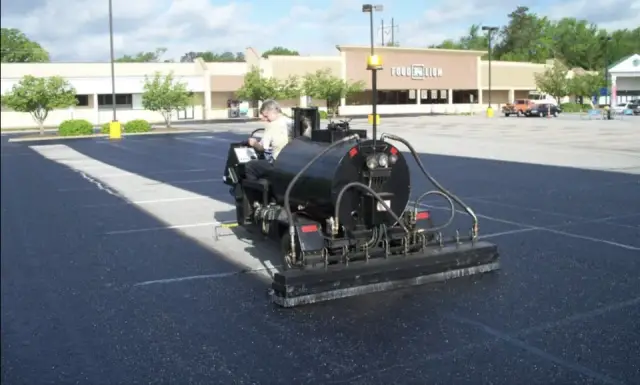
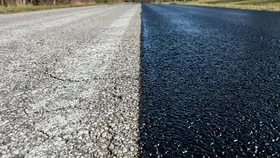
- Overnight rejuvenation. Revolution BLACK™ and our other rejuvenation treatments go down at night under temporary lighting, cure to traffic in about 90 minutes, and have the field re-opened before stores unlock. We sequence anchor aprons, drive aisles, and the inline frontage so no receiving route is ever fully blocked. The lot comes back true black — which, for a tired center, is half the curb-appeal problem solved on its own.
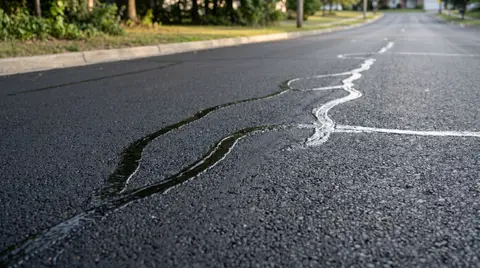
- Phased crack sealing and overlay. Hot-rubberized crack sealing on working joints once the rejuvenator has dried; where a section genuinely needs new asphalt, our Fused-Bonded Overlay™ glues the new lift to the old so existing cracks don’t telegraph back through. All of it phased zone by zone, never the whole lot at once.
- Traffic-managed work zones. Cones, signage, flaggers where the site needs them, and a zone plan worked out with center management before a single truck rolls in — so deliveries, customers, and the work never collide.
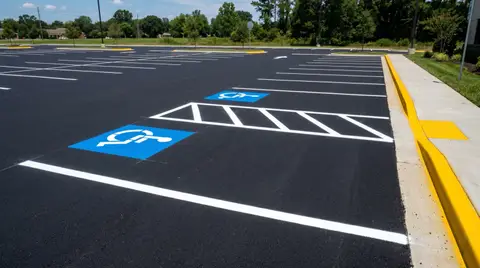
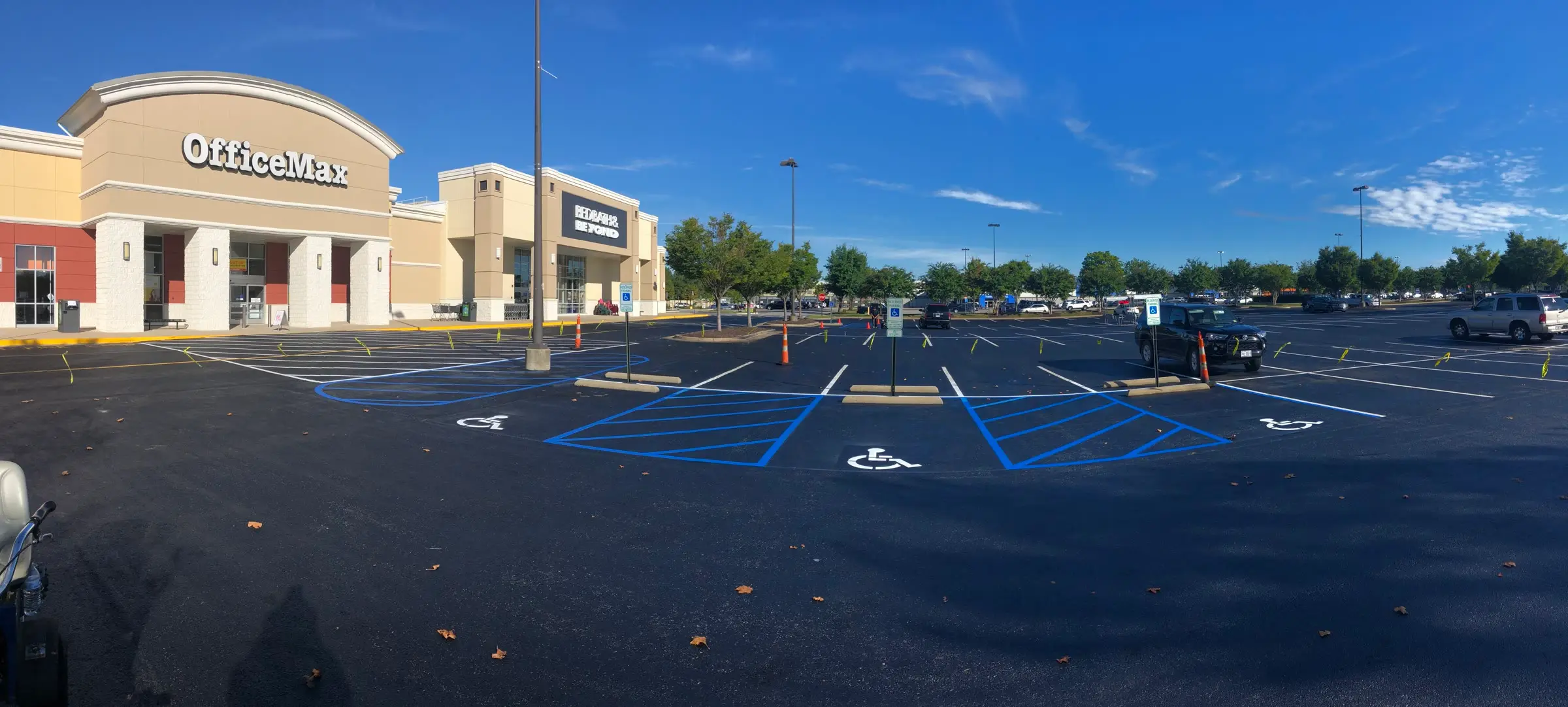
- ADA-compliant retail striping. Accessible stalls and access aisles to current width-and-count spec, van-accessible spaces, fire lanes, crossings, cart-corral markings, and EV stalls — laid in thermoplastic and traffic paint that reads right under headlights at year five. Retail centers get audited and complained about; we close that exposure on the same overnight pass.
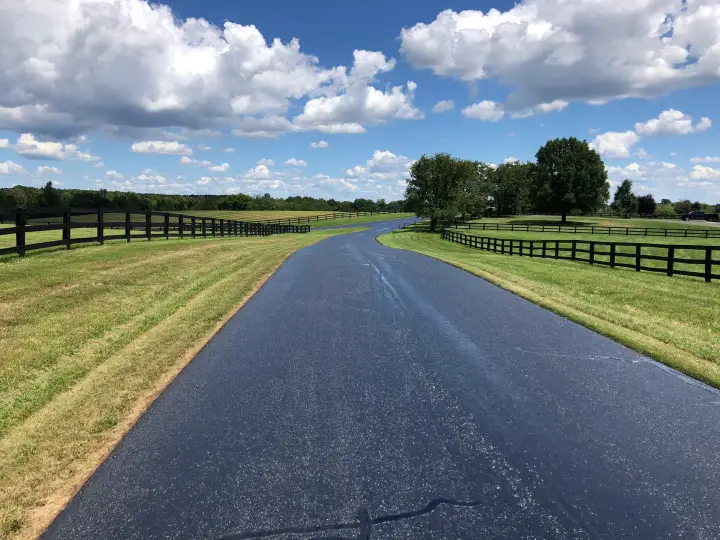
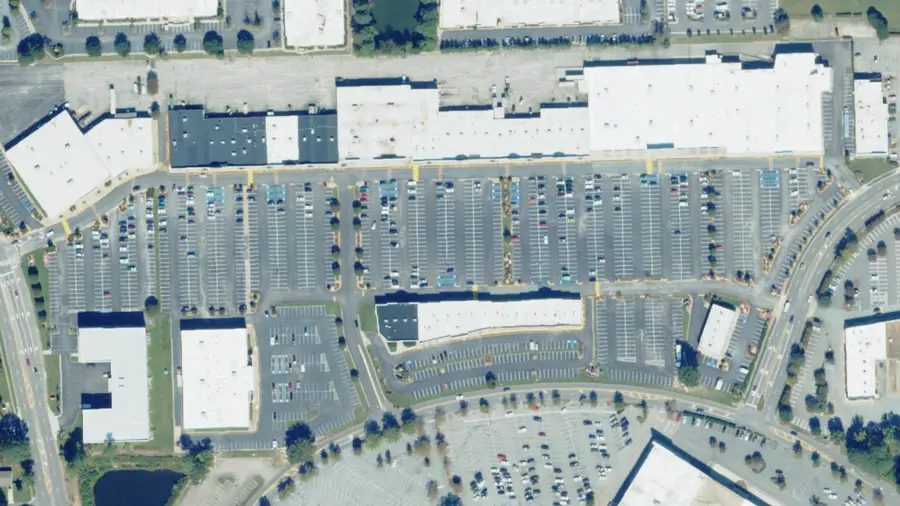
- Lifecycle planning, not tear-out. We’ll map the whole center: which sub-areas are rejuvenation candidates, which need sealing, which corner of the loading apron actually has base failure and needs reconstruction. Then we put the field on a rejuvenation cycle — re-treat every four years, re-seal new joints, refresh the striping on the same pass — so the center never looks neglected and the big repaving number gets pushed out, again and again, until it lands in a capital cycle that can absorb it.
Credentials & track record
TriTechnologies is a licensed Virginia Class A contractor — DPOR #2705144755, specialty Asphalt Paving and Seal Coating — and carries commercial insurance; certificates and bonding documentation are provided with proposals on request. We’re a business-partner member of the Community Associations Institute (CAI) through the Washington Metro chapter — relevant wherever mixed-use overlaps with managed communities — and a registered eVA vendor with the Commonwealth of Virginia.
The references hold up to procurement scrutiny, because they’re on the public record: our municipal clients include the City of Fairfax — its asphalt-rejuvenation term contract, awarded to us in 2024 as low bidder — and Broadlands HOA in Leesburg first engaged us across its private road network in 2017, then brought us back in 2023. Our crews run paving and patching to VDOT Road and Bridge specifications even on private lots, because the performance difference is too large to leave on the table.
A few questions we hear on every site walk.
- Can you really do a center this size without closing it?
- Yes — that's the standard approach, not the exception. We work in zones small enough that no anchor's receiving route is ever fully blocked, run night shifts (roughly 9 p.m. to 5 a.m.) under temporary lighting, and sequence the work so each area is back in service before the first delivery truck or the first employee car. A 60,000-square-yard center is typically four to six overnight shifts with zero business days lost.
- What about the loading docks and truck routes — those take a beating.
- We assess them separately, because they age differently. A loading apron under constant tractor-trailer turning loads is the first place we expect to find genuine base failure — and if it's failing, rejuvenation won't save it; that area needs full-depth reconstruction. We'll tell you which sub-areas can ride the rejuvenation cycle and which need real work, in writing, before you commit to anything.
- How do you handle ADA compliance on an older center?
- The assessment flags where the current layout is out of date — stall width, access-aisle spacing, van-accessible count, signage, fire-lane markings — and we bring it to current spec as part of the restripe. On an overnight rejuvenation pass it's marginal extra cost, and it's one of the cheapest pieces of liability a center can close.
- Will rejuvenation work on a 20-plus-year-old center?
- Often, on most of the field — if the wearing course is oxidized but the base is intact (no alligator cracking, no deep rutting, no bird-bath drainage failures). It can add four years per application. Where the base is failing, it won't, and we'll say so. The honest version is usually "rejuvenate 90% of the field, reconstruct these two areas, put it all on a cycle" — which is a fraction of the cost of a panic overlay of the whole site.
The work behind the pitch.
Built for how your business
actually uses the pavement.
A free assessment, a one-sheet report, and a recommendation that fits your constraints — the deliveries, the audits, the budget cycle, the tenants — not a generic paving quote.