









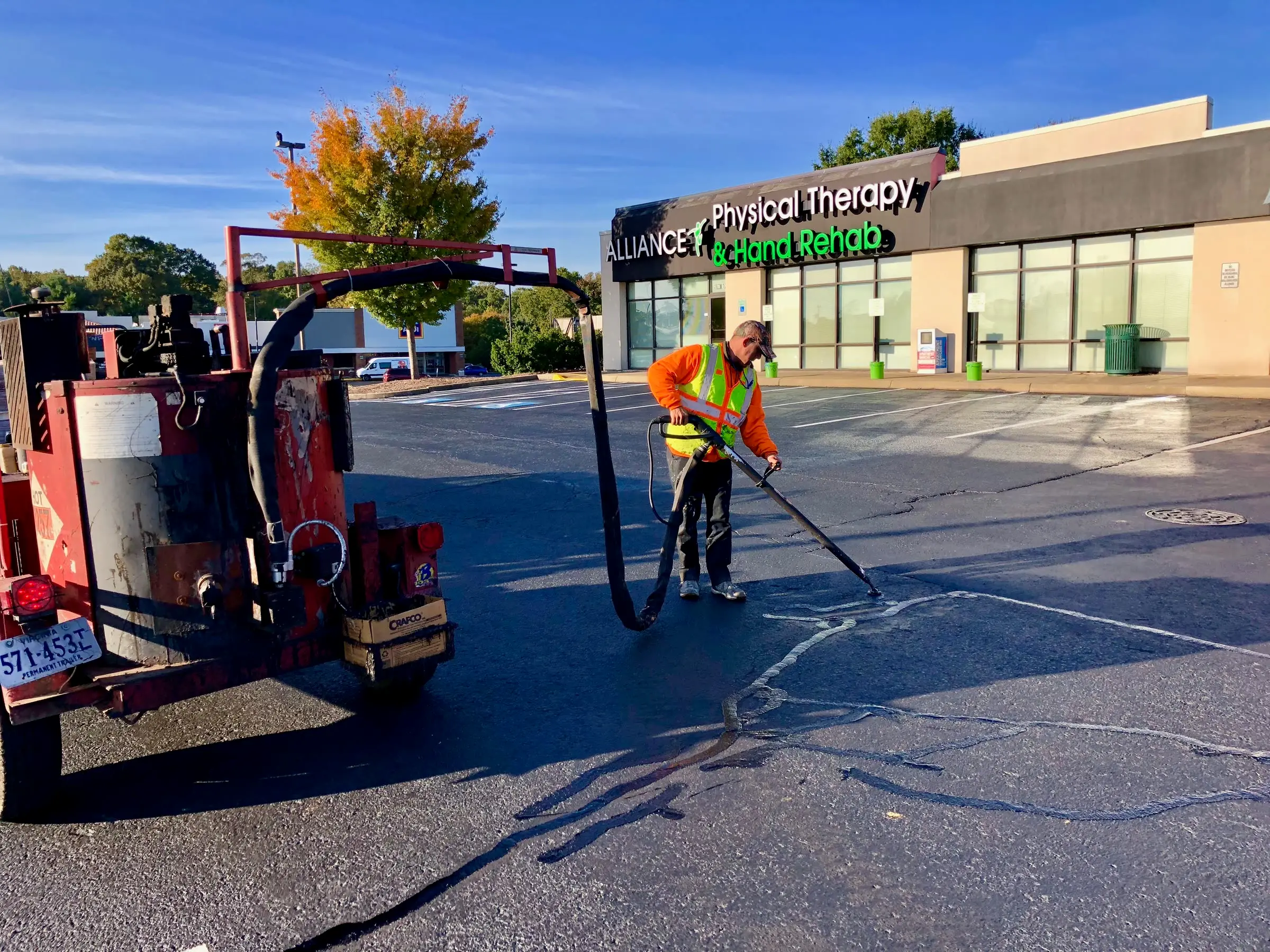
Asphalt Crack Sealing
Pavement cracking is an inevitable phenomenon that maintenance engineers have to accustom themselves to. It is impossible to construct a pavement that does not develop cracks after a certain amount of service time.
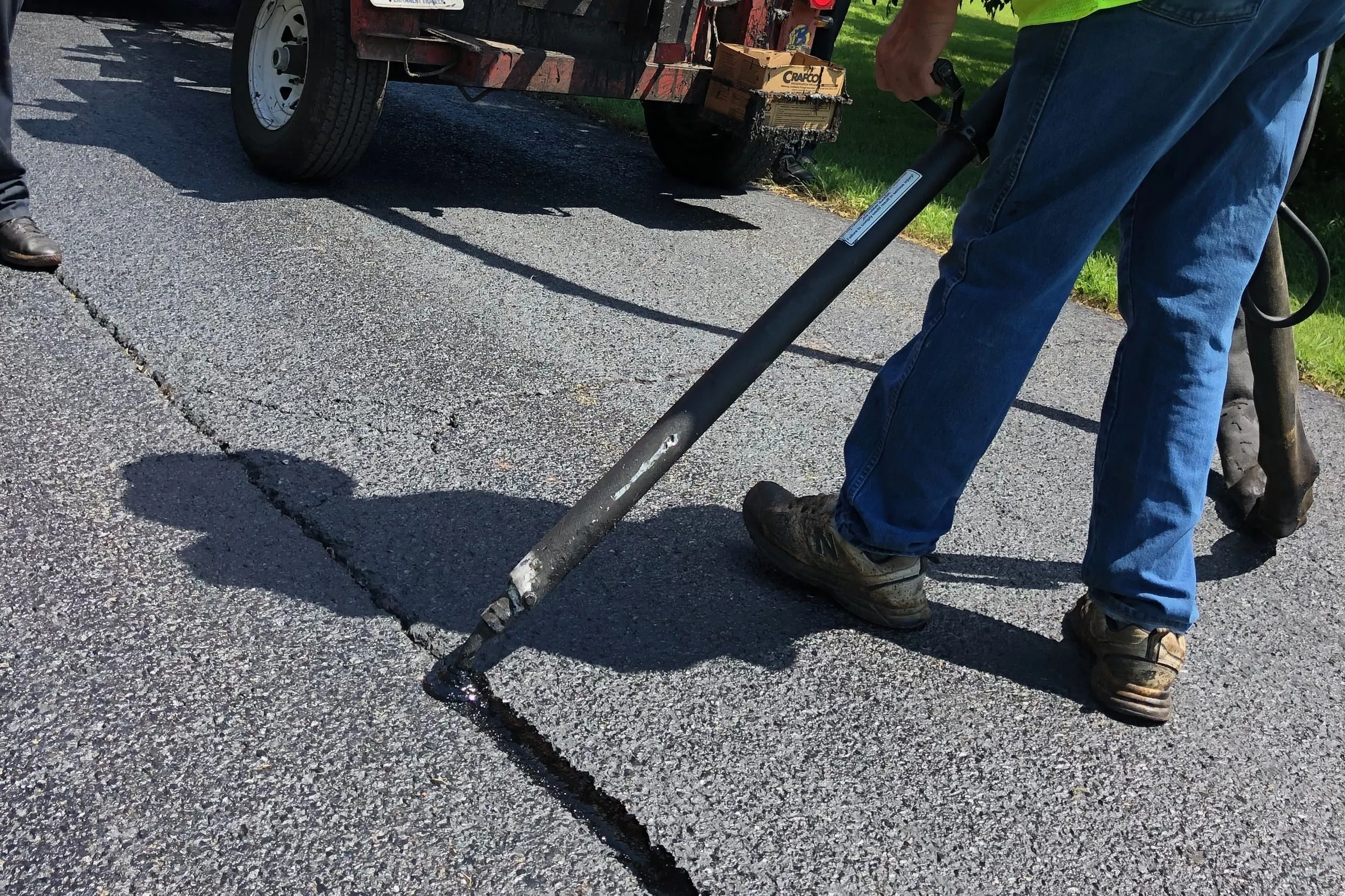
Pavement cracking is an inevitable phenomenon that maintenance engineers have to accustom themselves to. It is impossible to construct a pavement that does not develop cracks after a certain amount of service time. Cracking is one of the two main concerns considered in the pavement design process (the other being rutting); it is the primary mode of deterioration in asphalt cement pavement. Cracking occurs in a variety of forms: transverse, longitudinal, block, and alligator shape. Cracks need to be treated promptly because they create openings for moisture to penetrate the pavement layers. Moisture or water can cause severe damage when trapped in the crack. Neglecting pavement cracking usually leads to accelerated deterioration of the pavement, resulting in significant problems such as potholes or base failures, which cause the serviceability of the pavement to decline.
Cracking, since it is such a major form of pavement deterioration, is usually the deciding factor in determining the proper time for rehabilitation and the appropriate method to be applied. When cracks develop on the surface of the pavement, it is a sign of reduction in pavement integrity and serviceability. Regular repair of pavement cracks is one of the main methods of preventive maintenance, since failure to repair cracks in a timely fashion can lead to accelerated deterioration of the pavement in the form of crack growth, spills, secondary cracks, and potholes. The main causes of pavement cracks are thermal movements and fatigue due to excessive loading. Cracking is an inevitable problem given the network of more than two million miles of asphalt surfaced roads in the United States. It is important to find effective solutions to minimize its effect and to extend the service life of our roads.
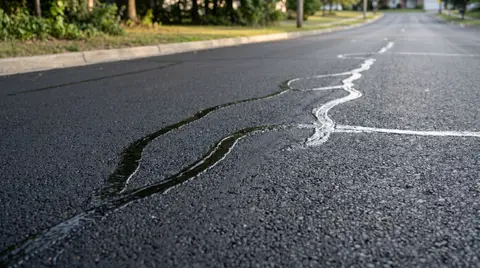
Crack repair consists of crack sealing and crack filling. Usually, crack sealing refers to routing cracks and placing material on the routed channel. Crack filling, on the other hand, refers to the placement of material in/on an uncut crack.
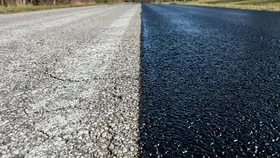
TRITechnologies employs a hot pour crack sealing extensively as a cost effective technique in preventive maintenance over a cold pour application. Preventive maintenance is characterized by its ability to preserve and extend the life of pavement. Since cracks on the pavement surface allow water and uncompressible materials such as sand, dirt, and other debris to enter the pavement structure, the presence of these cracks can dramatically accelerate deterioration and weakening. Sealing cracks prevents further deterioration of the pavement and, when properly executed, can extend the life of the pavement anywhere from 6 months to 4 years. In many cases, when roads are selected for a full width asphalt rejuvenation, cracks that are 1/4 inch or greater in width will require crack sealing once the rejuvenation treatment has dried — the rejuvenator goes down across the full width first, then the working cracks are sealed.
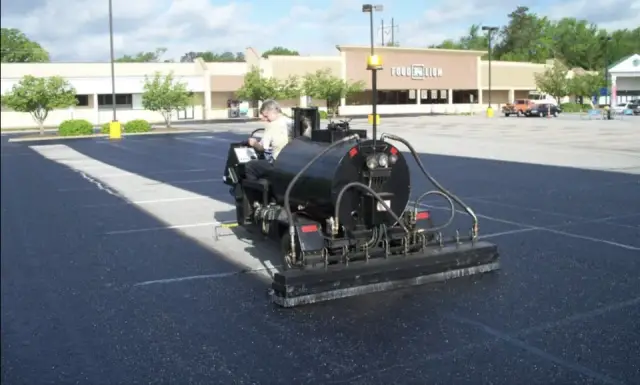
Locate the 1/4 and larger cracks, using a air lance or a heated torch clean the crack of any dirt and vegetation. This process will help dry the crack and prepare the wall for the sealer. Apply the Hot pour sealant per manufactures specifications. 350 – 390 degrees. If needed apply a coat of sand over the surface to avoid the sealant from tracking. Leave areas closed down as needed to allow material to set up. Open to traffic once material is cooled down.
More from the Insights desk.
- Honest comparison
Asphalt rejuvenator vs seal coat
Sealcoating is a surface film. Rejuvenation treats the aging itself. A sourced side-by-side — what each does, what the record shows, and what the law changed.
Read the piece - Roadway economics
Roadway preservation costs: rejuvenation vs. micro-surfacing vs. mill-and-resurface, per centerline mile
What it actually costs to keep a 24-foot roadway in service for 24 years — three preservation strategies compared on annualized cost per centerline mile, and why the lightest treatment on the most frequent cycle wins the budget.
Read the piece
The page version is the abstract.
Your lot is the specific.
A free site walk, a one-sheet report, and a straight recommendation — rejuvenation, sealing, overlay, reconstruction, or "not yet." We tell you which, even when the honest answer costs us the sale.