Service · Pavement preservation

Asphalt rejuvenation.
Plant chemistry, asphalt physics.

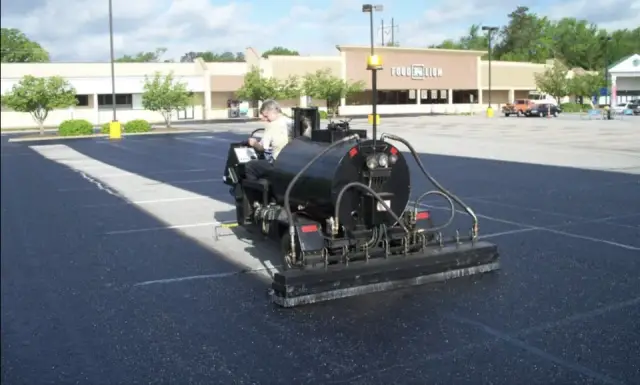
Sprayed on, soaked in, cured by lunch. A penetrating rejuvenator that reverses years of oxidation damage in a single application — no milling, no tear-out, no business disruption.

What it is

Aging is a chemistry problem, not a structural one.

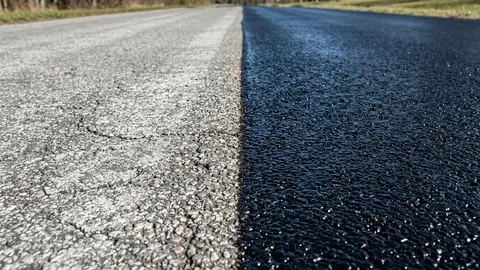
The black stuff in pavement is bitumen — a colloidal system of heavy asphaltenes dispersed through light, oily fractions. Under UV exposure, oxygen, and traffic heat, those light fractions oxidize and evaporate. The asphaltenes stay behind in a stiffer, more brittle ratio. The pavement turns gray, then loses flexibility, then surface-cracks under load. That's not the structural section failing — it's the binder.

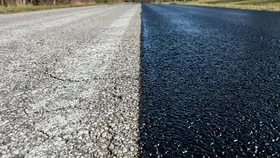
A penetrating rejuvenator works on that binder directly. Sprayed onto an oxidized surface, the treatment soaks into the binder matrix, reduces its stiffness, and brings the asphalt's effective ductility back to something close to its original spec. The pavement flexes again. Surface cracks close. The structural section underneath — which was usually fine — gets four extra years of useful life from a single application.

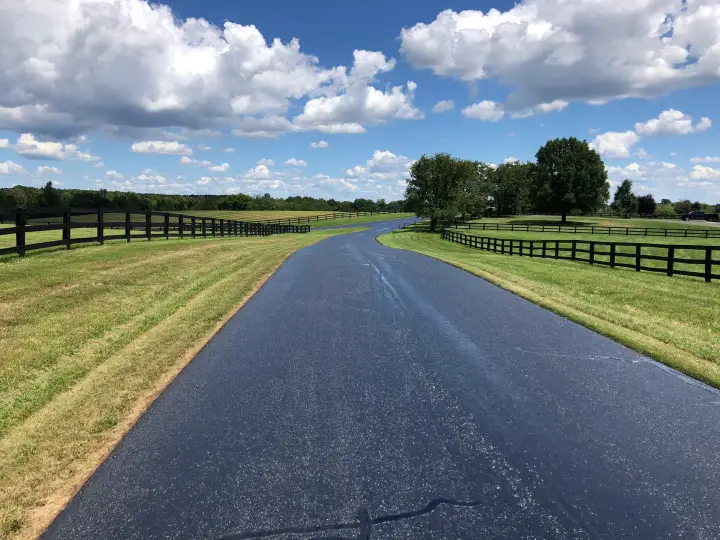
The flagship treatment we apply is Revolution BLACK™, a 100% black plant-based rejuvenator from Greene Technologies Corporation. We also apply Delta Mist®, a 100% clear plant-based rejuvenator from Collaborative Aggregates, developed with the Warner Babcock Institute around the 12 Principles of Green Chemistry. Both of these 100% plant-based rejuvenators penetrate from three-eighths of an inch to a half inch and cure in ninety minutes, so a lot or roadway we treat at 8 a.m. is back in service before lunch. For sites where bio isn't the right fit — heavier traffic-grade requirements, certain DOT specs — we also apply CPR™ (Conditioning Pavement Rejuvenator) from Hydro-Labs — a coal-tar-based rejuvenator whose chemistry class carries over 56 years of FAA testing history on airfield runways. One conversation, the right chemistry for the slab.

When to use it

The right call when the binder has aged faster than the slab.

  • Pavement five to fifteen years old, oxidized but structurally sound (no alligator cracking, no deep rutting)
  • Lots that can't tolerate downtime — retail, distribution, healthcare, parking decks
  • Maintenance contracts where budgeting about $0.50/SY a year beats a $25/SY repave every fifteen years
  • Green-initiative properties, LEED-tracked portfolios, ESG-reporting owners
  • HOAs and shopping centers where surface appearance matters and the underlying section is fine
  • Pre-overlay treatment to restore binder flexibility before adding a new lift
  • Airport facilities — ramp aprons, taxiway shoulders, and landside lots where CPR™'s FAA testing history is the requirement
The process

From assessment to same-day return to service.

  1. 01

    Assessment.

    We walk your site with our 40 years of experience and a camera. The goal is a one-sheet report: is this a rejuvenation candidate or does it need something else? You get the answer either way — even if it's "not the right call for this lot."

  2. 02

    Surface prep.

    Blow the work area clean — powerful walk-behind blowers push dirt, sand, and debris off the pavement, and anything stuck to the surface gets scraped loose with wire brushes first. Whatever sits on the surface blocks penetration, so it goes before we spray.

  3. 03

    Application.

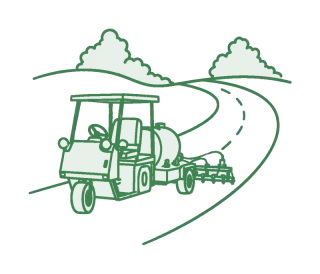
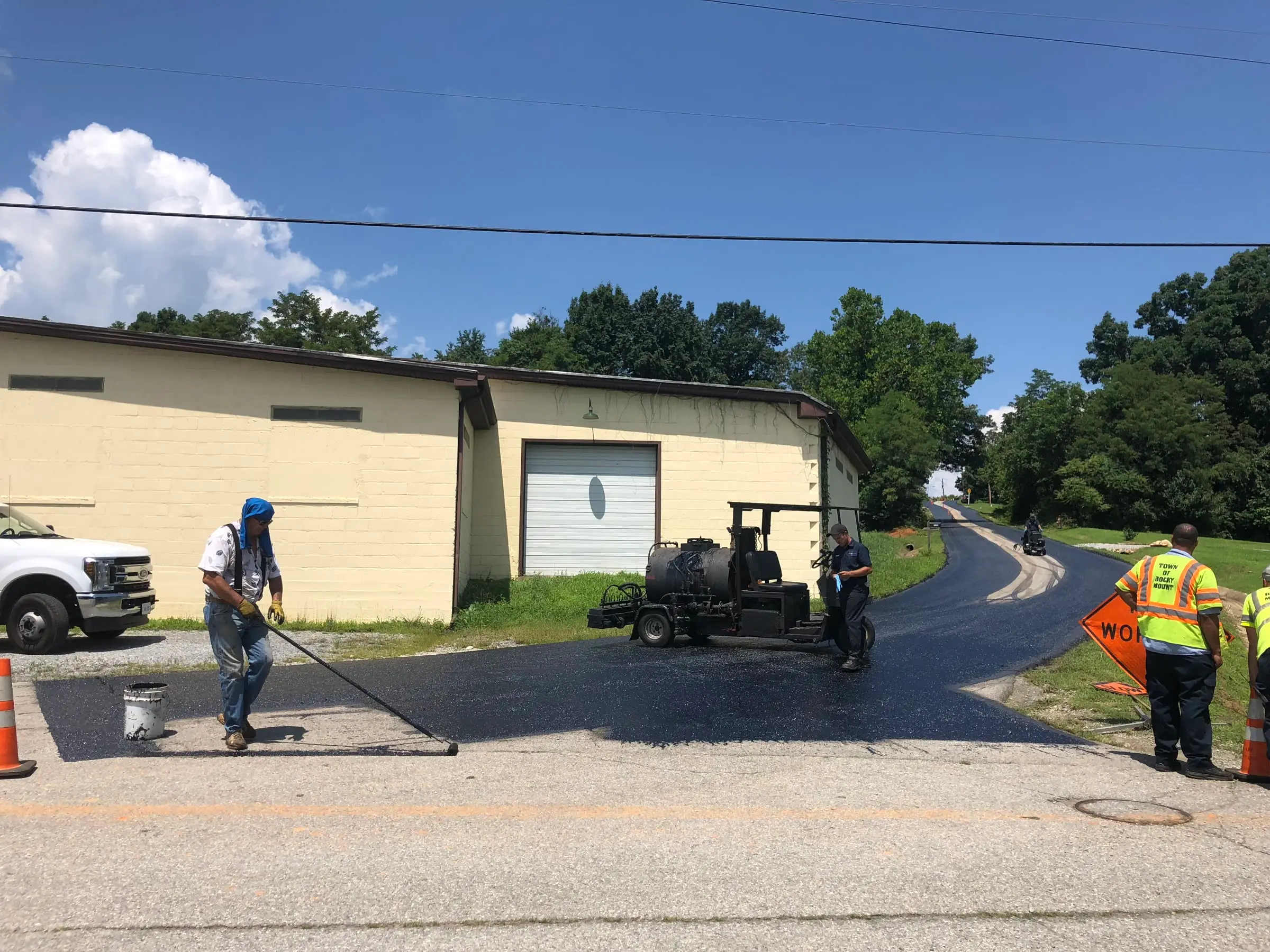
    Sprayed at a calibrated rate — typically 0.04 to 0.08 gallons per square yard, adjusted for binder grade and oxidation depth measured during assessment. Two passes in perpendicular directions as needed for even coverage.

  4. 04

    Cure and absorption.

    The treatment penetrates within minutes. Surface cure to traffic is roughly ninety minutes in normal conditions. We monitor with a tack test before re-opening to vehicles.

  5. 05

    Crack sealing (if needed).

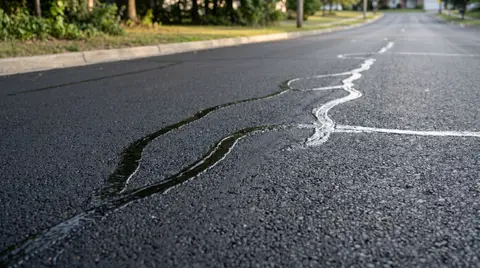
    Surface cracks wider than roughly a quarter-inch get hot-rubberized sealant after the rejuvenator is dry. It handles micro-cracking but won't bridge a working joint on its own.

  6. 06

    Return to service.

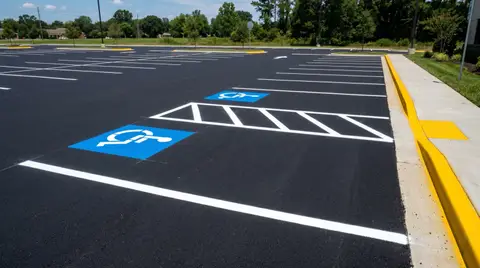
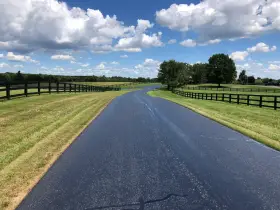
    Same day. The lot or roadway comes back online with a fresh new look — the darker treated asphalt and freshly re-painted lines for curb appeal.

By the numbers

Spec sheet.
Quick read.

Numbers here are for the flagship Revolution BLACK™ and Delta Mist® treatments we apply. CPR™ differs — most notably an 8-to-24-hour cure at the full application rate; full data sheets are available on request during the assessment.

  • 100%

    Plant content

    Bio-derived, zero coal tar

  • 3/8–1/2"

    Penetration

    Soaks into the matrix

  • 90 min

    Cure time

    From spray to traffic

  • 4 yr

    Aging reversed

    Per single application

Cost vs. tear-out

A tenth the cost of an overlay — and still cheaper per year of pavement life.

The comparison is simple in shape, complicated in detail. Real numbers depend on site conditions, traffic class, and which chemistry the job calls for. Treat the figures below as ranges, not quotes.

Approach Typical cost / SY Lifespan added Return to service (per section)
Asphalt rejuvenation $1.50 – $3.00 4 years Same-day
Mill-and-overlay $20.25 – $30.00 10–15 years 1–2 days
Full reconstruction $75.00 – $110.00 15+ years 1–2 weeks

The economics work two ways. On a single-cycle basis, rejuvenation runs about a tenth the cost of an overlay and adds about a third of the life — so each year of pavement life costs less, and the business-disruption cost is effectively zero. On a lifecycle basis, a maintenance program that rejuvenates every four years can keep a lot in service for 25+ years before reconstruction becomes necessary, versus 15–18 years on a pave-and-forget cycle. Total cost per year over that window is often up to 80% lower.

Weighing a sealcoat instead? That's a different comparison — a surface coat versus a binder treatment — and we wrote it up honestly, sources included, from the federal record to the new sealant laws in Virginia, Maryland, and DC: asphalt rejuvenator vs. seal coat.

Real pricing depends on site conditions, traffic class, and the chemistry the job calls for. The figures above are an order-of-magnitude comparison, not a quote.

Cost savings & ROI

Cost savings and return on investment — a worked example.

Based on a 24-foot-wide roadway (14,080 SY) over a ~24-year evaluation period:

Treatment strategy Unit cost / SY Years performed $ / centerline mile Annualized cost
Rejuvenation $1.50 – $3.00 Yr 4, 8, 12, 16, 20 $158,400.00 $7,920.00
Micro-surfacing $4.20 – $5.50 Yr 6, 13, 19 $211,200.00 $11,733.33
2" Mill / Re-surface $20.25 – $30.00 Yr 12 and Yr 23 $704,000.00 $29,333.33

Averages used: rejuvenator $2.25/SY · micro-surfacing $5/SY · 2" mill resurface $25/SY. Each strategy is annualized over the years of pavement service its passes deliver — 20 for rejuvenation (five four-year passes), 18 for micro-surfacing (three six-year passes), 24 for mill-and-resurface (two twelve-year lifts).

The economics of pavement preservation become even more compelling when evaluated over the full life of the pavement rather than as a single construction event. Based on a 24-foot-wide roadway (14,080 square yards) and a 24-year analysis period, a proactive preservation program consisting of asphalt rejuvenation at Years 4, 8, 12, 16, and 20 results in an annualized cost of approximately $7,920 per centerline mile. By comparison, a micro-surfacing program performed at Years 6, 13, and 19 has an annualized cost of approximately $11,733 per centerline mile, while a traditional 2-inch mill-and-resurfacing strategy requires an annualized investment of approximately $29,333 per centerline mile. Over the 24-year analysis period, the rejuvenation strategy reduces annualized pavement costs by approximately 73% compared to a conventional mill-and-resurface program, while micro-surfacing reduces annualized costs by approximately 60%. In addition to these significant cost savings, a proactive preservation program minimizes traffic disruptions, reduces construction impacts, and extends the service life of the existing pavement by delaying the need for costly rehabilitation.

  • Rejuvenation vs. micro-surfacing: savings of $3,813.33 per year — 32.5%.
  • Rejuvenation vs. mill & resurface: savings of $21,413.33 per year — 73.0%.

Rather than waiting for pavement to deteriorate to the point where major rehabilitation is required, a scheduled preservation program protects the owner's investment, delays expensive capital expenditures, and provides the lowest long-term cost of ownership.

Frequently asked

Nine questions we hear on every site walk.

Does asphalt rejuvenation work?
On pavement that's oxidized but structurally sound, yes — and the evidence is public. On NCAT's accelerated test track, a bio-based rejuvenator in our line-up held a 40% reduction in the industry's key cracking-susceptibility measure across six years and 20 million axle loads, and the technology class has been in service with the US Air Force and the FAA for over 40 years. What rejuvenation doesn't do is fix structural failure — alligator cracking or a failing base needs reconstruction, and if that's what your lot needs, that's what we'll tell you.
How long does asphalt rejuvenation last?
A single application typically extends pavement life by four years. On a managed maintenance cycle of every four years, we routinely keep pavement in service for 25+ years before reconstruction is required.
How do I make my asphalt look new again?
If the pavement has gone gray but is structurally sound, rejuvenation does it directly: Revolution BLACK™ restores the binder chemically and cures true black — the pavement itself, not a film sitting on top of it. Add fresh striping and the lot reads brand-new by the next morning. If the gray comes with alligator cracking or base failure, no surface treatment will make it look new for long — we'll tell you which situation you have after a free site walk.
How to rejuvenate old asphalt?
The short version of our process: blow the surface clean (stuck dirt gets scraped loose with a wire brush first), spray the rejuvenator at a calibrated rate — typically 0.04 to 0.08 gallons per square yard — let it penetrate and cure for about ninety minutes, then hot-seal any cracks wider than a quarter-inch once the surface is dry. The lot is back in service the same day. Age matters less than structure: five-to-fifteen-year-old pavement is the sweet spot, and sections that have already failed structurally need repair, not treatment.
Are there weather restrictions on when you can apply?
Yes. Surface temperature needs to be above roughly 50°F, with no rain expected for at least three hours after application. We don't apply during freezing weather. Most of our applications happen between spring and early fall, with shoulder-season windows in southern climates.
When can vehicles drive on a treated surface?
Roughly ninety minutes after application in normal conditions, after we run a tack test to confirm cure. For high-traffic lots we typically apply during off-hours and re-open the same business day. Heavy-equipment access (forklifts, semi-trailers) follows the same window; we adjust if your operation runs unusual loads.
What environmental certifications do the rejuvenators carry?
Revolution BLACK™ is a green, plant-based rejuvenator from Greene Technologies Corporation. Per Greene Technologies, it contains zero coal tar, no PAH (polycyclic aromatic hydrocarbon) compounds, and is sourced from renewable plant feedstocks. Delta Mist® is manufactured by Collaborative Aggregates, which developed it with the Warner Babcock Institute around the 12 Principles of Green Chemistry. For LEED-tracked or ESG-reporting properties, the treatment may contribute toward green-initiative criteria — ask us during the assessment and we'll provide the documentation your team needs.
What's the warranty?
Our rejuvenator applications come with our Four-Year Performance Warranty — in writing, included at no additional cost. The full coverage terms are spelled out in the proposal before you sign. The treatment's expected service life — four years of added pavement life per pass — is a technical expectation we report separately from the warranty, because real pavement life depends on traffic volume, climate, and the original construction quality, none of which we control. We back our work; we don't over-claim.
Can rejuvenation be applied more than once on the same lot?
Yes, and it's how the math works best. Most of our long-term clients are on a four-year cycle. Each subsequent application restores additional flexibility as the binder keeps oxidizing over time. The economics of multi-application maintenance are usually significantly better than letting a lot age to the point where overlay or reconstruction becomes necessary.
Free assessment

See what another four years
on your lot is worth.

A free site walk, a one-sheet report, and a straight recommendation — rejuvenation, sealing, overlay, or "not yet." We tell you which.

Get in touch

Let's talk about your pavement.

Tell us a few quick things. We respond within 48 hours · no obligation.

Need to share photos or qualify a complex project? Use the full project form →

Our free webinar is coming soon →

By submitting, you agree to our Terms of Use and acknowledge the Privacy Policy.