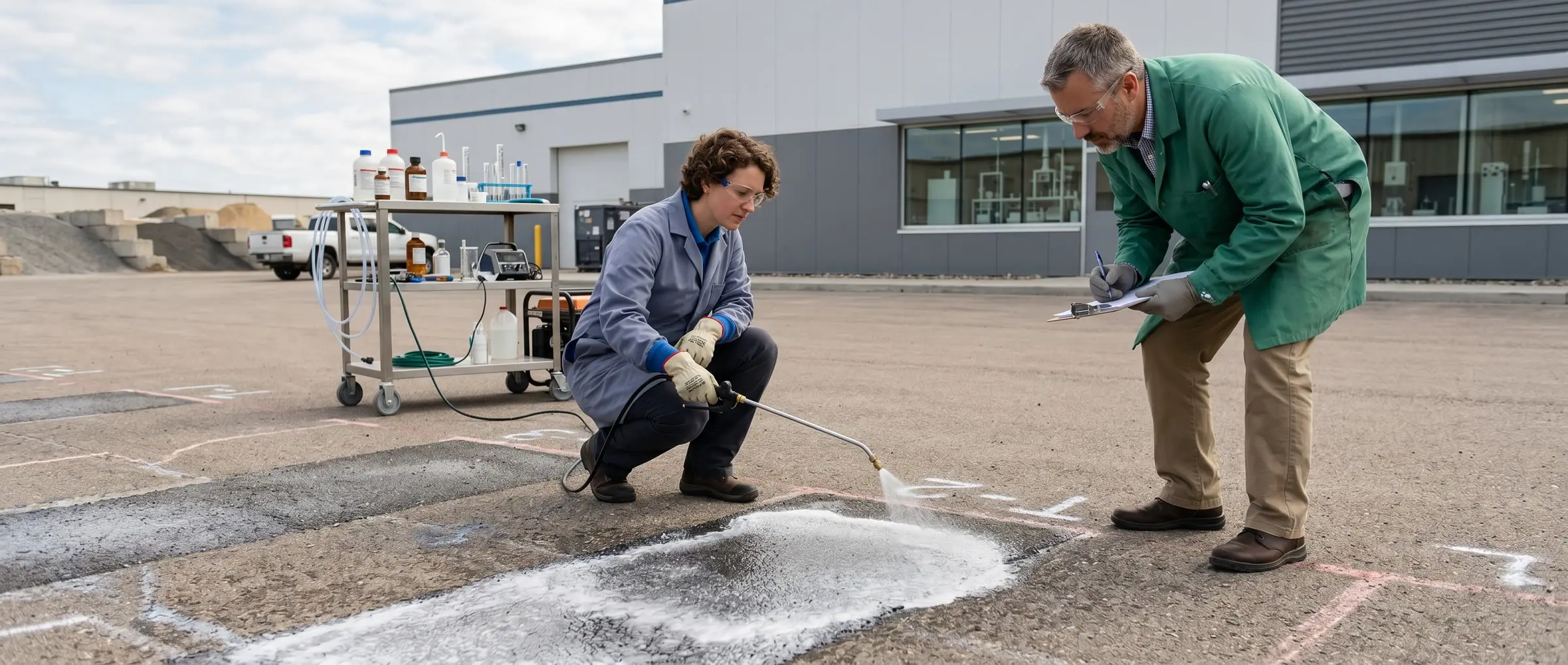
A rejuvenator is, mechanistically, a treatment for the binder
itself rather than for the surface above it. Sprayed onto an
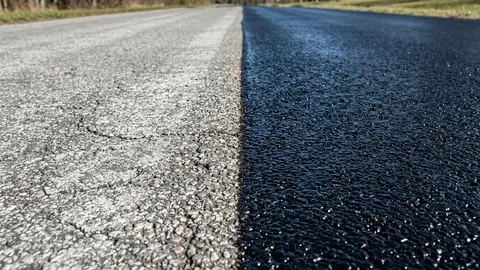
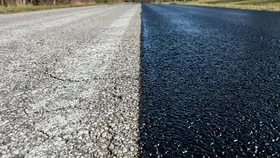
oxidized surface, the carrier penetrates the binder matrix from
three-eighths of an inch to a half inch in minutes. Once
inside, the rejuvenator interacts directly with the oxidized
binder — reducing stiffness and improving the rheological
properties that govern cracking resistance. The
binder's effective viscosity drops back toward its original
spec; ductility, the property that lets pavement flex under
traffic load without cracking, comes back with it.
The chemistry is specific. A
coating
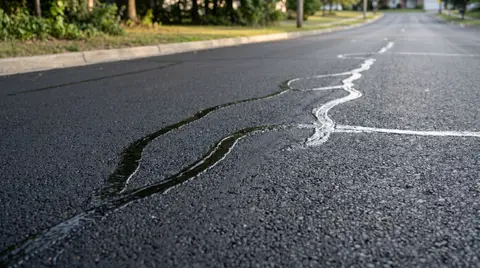
like sealcoat sits on top of the surface — it can hide a problem
but it cannot reverse the binder aging that caused the problem.
A
rejuvenator
works the opposite way: it penetrates, diffuses, and reacts.
There is nothing left on the surface to peel, flake, or
re-emulsify in rain. The "treatment" is no longer a layer; it
has become part of the binder again.
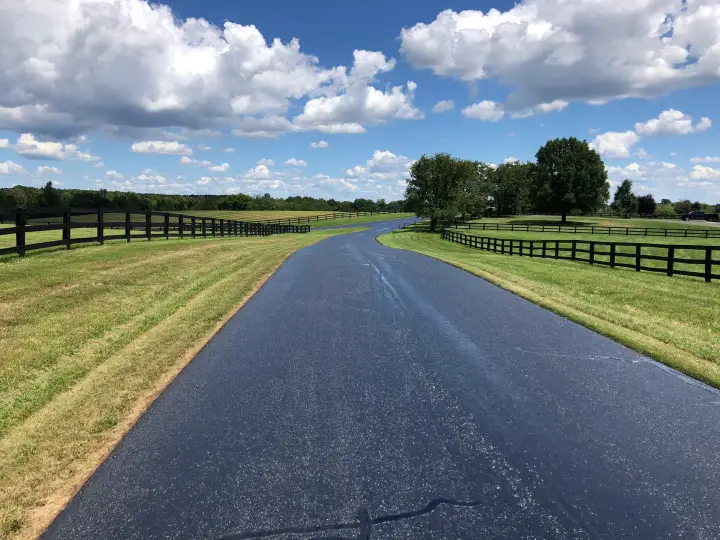
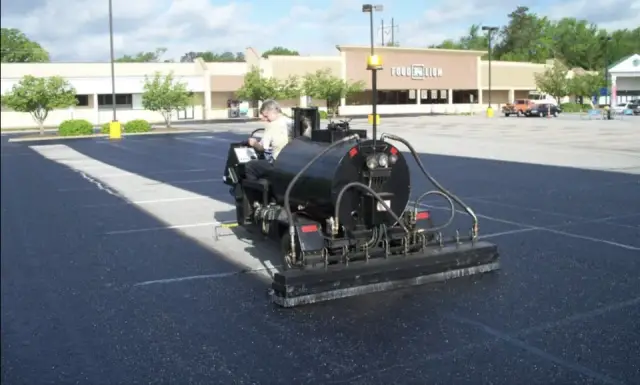
In the case of the bio-based pair we apply — Revolution BLACK™
and Delta Mist® — the active chemistry is plant-derived rather
than petroleum-derived, and the feedstock is renewable. Both are
formulated to do that work on weathered asphalt. Per
Collaborative Aggregates, Delta Mist®
adds a biodegradable carrier and a low VOC profile; both
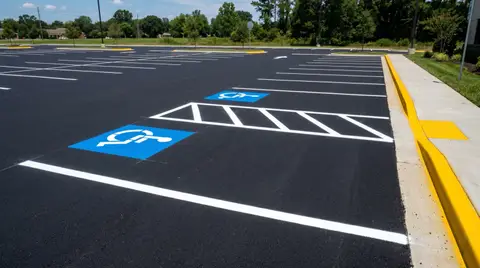
formulations cure fast enough that crews are back on the lot in
90 minutes after application.