











Greater Richmond

Richmond,
Virginia.

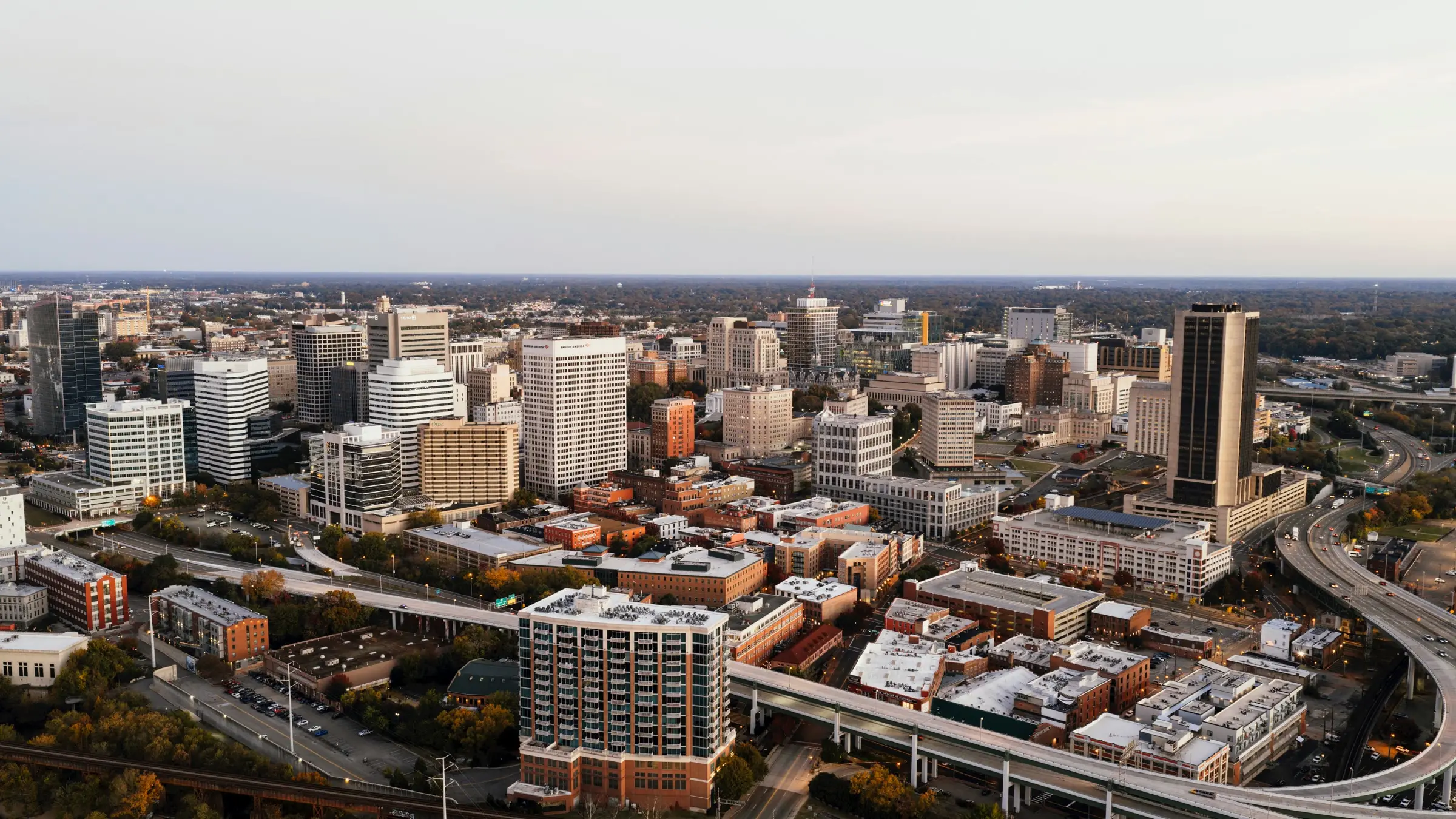
Greater Richmond is an hour south of our Fredericksburg yard — close enough that we run it like a home market. Retail anchors at Short Pump and Stony Point, distribution centers along the I-95 / I-64 interchange, and HOAs throughout Chesterfield and Henrico.

Why we're here

One hour from the yard, a full home-market crew.

Greater Richmond is a sixty-minute drive south of our Fredericksburg shop on I-95 — close enough that we run it like an extension of our home market rather than a satellite. Crews leave the yard at first light and are on site in Innsbrook or Short Pump before the retailers unlock their doors. Equipment stays mobile; materials stage from the same Fredericksburg yard that supplies our local work.

The metro itself is bigger than most people realize. The City of Richmond, plus Henrico to the north and Chesterfield to the south, plus Hanover and Goochland on the western edge, form one of the largest commercial property markets between DC and Charlotte. The I-95 / I-64 interchange is the gateway between the East Coast shipping corridor and the Port of Virginia, which means the logistics and distribution segment alone is roughly the size of an entire mid-sized metro elsewhere.

Asphalt crack filling and crack sealing in Richmond

Fall is crack season in the Richmond metro, and the region earns it: roughly 60–75 freeze-thaw cycles a winter plus river-corridor moisture means every open crack is a water route to the base, and one cycle season can turn hairline cracking into edge failure by spring. The terminology matters less than the material — “crack filling” is the everyday name, but what a Richmond winter actually calls for is hot-rubberized crack sealing: a heated, flexible sealant that moves with the joint instead of popping out at the first freeze. We run it as a standalone visit or bundled into a rejuvenation cycle, sealing open cracks before the first freeze so meltwater stays out of the base all winter.

Local conditions

What Richmond pavement actually has to survive.

The Richmond metro stitches together three jurisdictions, a major shipping interchange, the James River floodplain, and pavement ages spanning fifty years. Each one shapes how we spec and schedule the work.

  1. 01

    Three jurisdictions, one metro.

    A Richmond commercial site can sit a hundred feet outside the city line and fall under entirely different rules. The City of Richmond Department of Public Works handles right-of-way in the urban core; Henrico County runs Public Works permits for the West End and Innsbrook; Chesterfield's Transportation Department covers the southside from Midlothian to Chester. We pull and track permits across all three and know which office answers the phone fastest on a Friday afternoon.
  2. 02

    I-95 / I-64 interchange loading.

    Richmond is where the East Coast's I-95 meets I-64 west to Charlottesville and east to the Port of Virginia at Hampton Roads. Industrial pads near that interchange — distribution centers, intermodal yards, the Cosby Hill and Bellwood truck stops — see weight loading that's an order of magnitude above a typical retail lot. Surface preservation has to start with a base that's specced for actual axle counts, not aspirational ones.

  3. 03

    James River floodplain drainage.

    Southside Richmond and the Manchester redevelopment sit in or near the James River's 100-year floodplain. Lots that drain into the river system are subject to additional E&SC scrutiny under the Chesapeake Bay Preservation Act, and any new impervious surface triggers stormwater management review. We design preservation cycles around the floodplain calendar — major work happens in late summer when the river runs low.

  4. 04

    Mid-Atlantic freeze-thaw, river-corridor moisture.

    Richmond averages roughly 60–75 freeze-thaw cycles per winter — a touch fewer than Fredericksburg, but the James River adds humidity and groundwater intrusion that lengthen the effective stress window. Pavements within a half-mile of the river show binder oxidation patterns closer to coastal Tidewater than to the Piedmont's dry-line cycles further west.

  5. 05

    Short Pump to Stony Point — pavement-age mix.

    Greater Richmond's commercial pavement runs the full age spectrum in a single drive. Stony Point Fashion Park (Midlothian, 2003) and Short Pump Town Center (Glen Allen, 2003) are both in their preservation prime. The 1970s-era retail along Midlothian Turnpike is overdue for rejuvenation. And the new logistics corridor along I-295 in eastern Henrico is still on its first ten years. Different ages, different chemistries, same contractor.

Your local crew

Fredericksburg-based, Richmond-fluent.

Richmond-area jobs run out of our Fredericksburg shop the same way home-market jobs do — one contract covering the job from the first walkthrough to the punch list. The assessment is documented — measurements, photos, condition notes — the proposal is built from that record, and the accountability for all of it belongs to founder Jeff Pokorny.

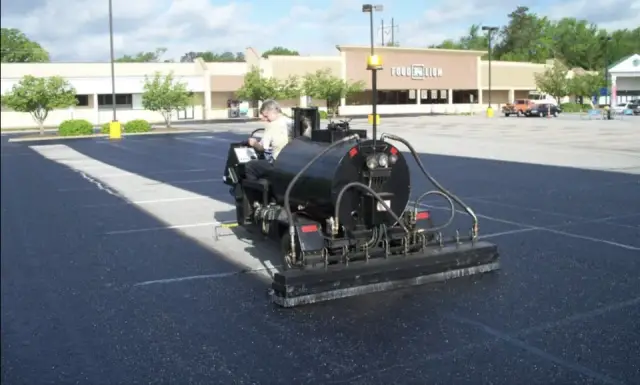
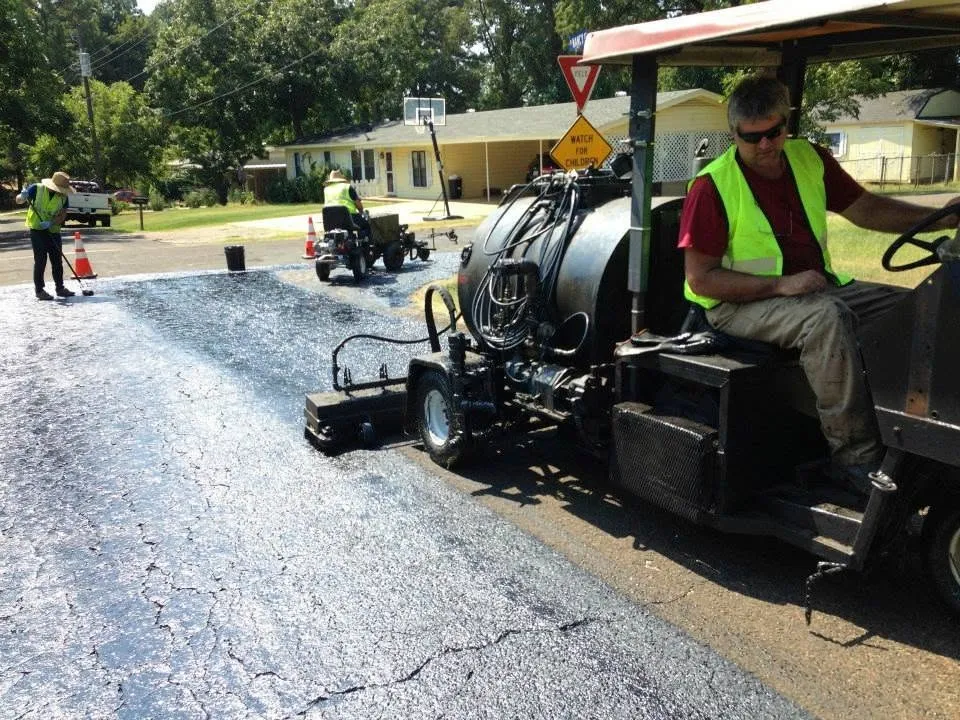
TriTechnologies spray units applying asphalt rejuvenator across a neighborhood street, with founder Jeff Pokorny at the controls and a crew member brooming the treated surface.
Find us

One hour north, up I-95.

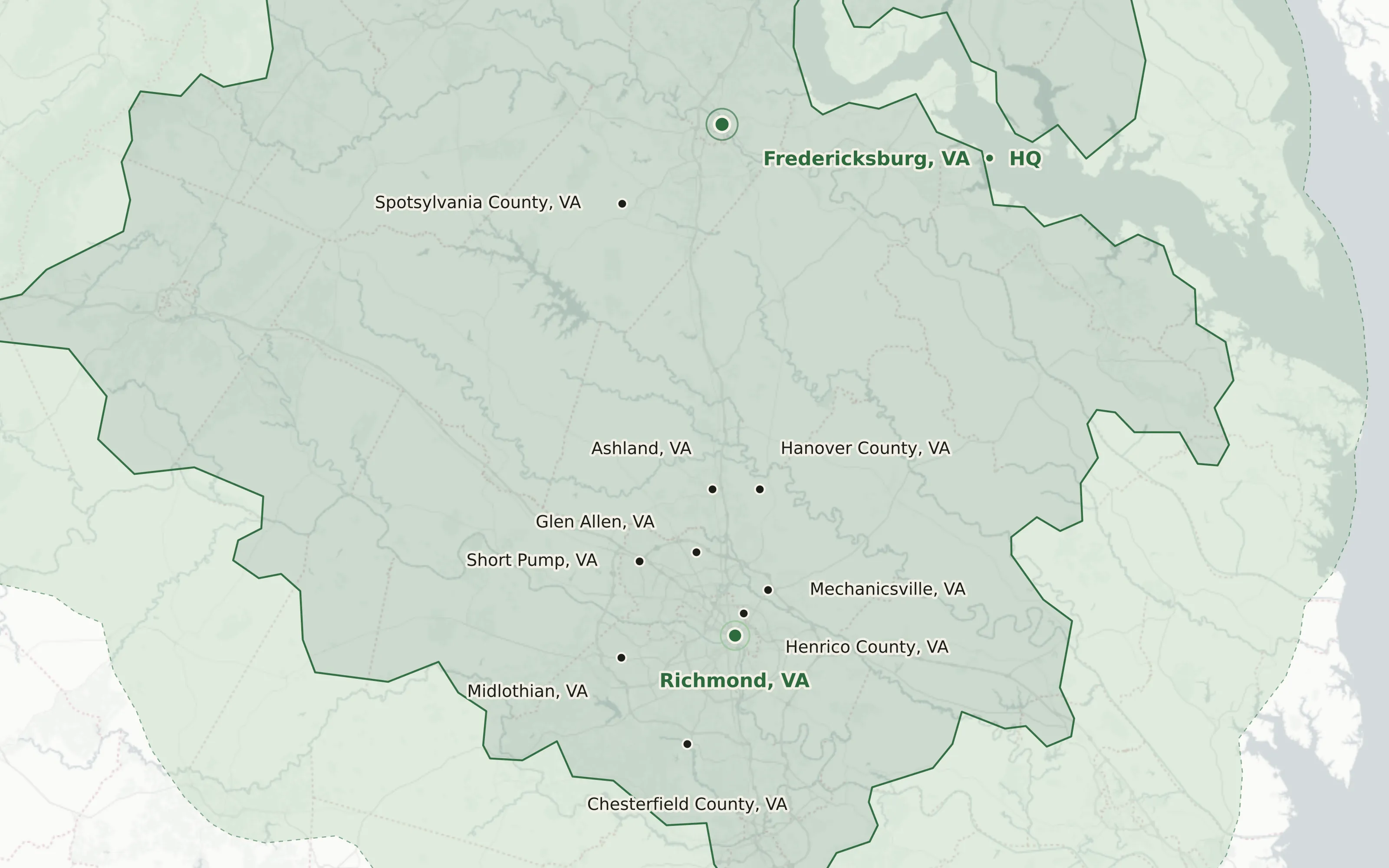
The yard is in Fredericksburg. The map below shows the Richmond service radius — Henrico, Chesterfield, and the close-in counties.

Drive-time coverage map showing TriTechnologies' two-hour radius around Richmond, VA, with our Fredericksburg-area shop marked.
Solid line: 2-hour drive radius. Dashed line: extended reach. Map credits.
Local FAQ

Six things property managers ask us about Richmond work.

Do you do asphalt crack filling in Richmond?
Yes — hot-rubberized crack sealing is one of our three core services, and Richmond's freeze-thaw count makes it the highest-leverage work on the fall calendar. Sealing open cracks before the first freeze keeps meltwater out of the base through the winter cycle season. We run it as a standalone visit or bundle it with a rejuvenation application, and quote responses go out within 48 hours of the site walk.
Do you handle multi-jurisdiction sites in the Richmond metro?
Routinely. Some West End and southside sites straddle the city/county line, and we pull City of Richmond Public Works permits in parallel with Henrico DPW or Chesterfield Transportation as the job requires. The plans go in together, the E&SC submissions reference the same scope, and we manage both inspector schedules from one point of contact. You don't need to know which agency owns which side of the parking lot.
Can you handle the heavy-axle loading near the I-95 / I-64 interchange?
Yes — most of our trailer-yard and distribution-center work specs CPR™, the traffic-grade coal-tar chemistry we apply, rather than the bio-based rejuvenators, because it holds up better under sustained Class 9 axle loading. We run the load math during the assessment, look at your axle counts from a recent month, and recommend the chemistry that fits the actual punishment the pavement is taking.
What about Chesapeake Bay Preservation Act drainage requirements?
Lots draining into the James River system are subject to additional Chesapeake Bay Preservation Act scrutiny on E&SC plans, and new impervious surface triggers stormwater management review. Our preservation work — rejuvenation, crack sealing, overlay — doesn't add impervious surface, which keeps most of our jobs out of the heavier review path. For jobs that do touch new pavement, we coordinate with the locality's environmental engineering team before scheduling.
Do you work with the Port of Virginia logistics corridor?
Richmond-area logistics sites are within our home-market radius, and we spec for what that corridor actually does to pavement — port-bound trailer traffic loads a surface differently from retail, so industrial pads get heavier-grade chemistry and overlay choices matched to sustained Class 9 axle loading. We're not a Hampton Roads–based crew; the Richmond end of the I-95 / I-295 / Route 460 corridor is the part we cover.
How early should we book a Richmond-area assessment?
Quote responses go out within 48 hours, and we can usually walk a Richmond-area site within five to seven business days. Scheduling the work itself depends on the calendar — spring and fall fill up fastest, especially around the holiday-retail blackout window in November–December. For a Memorial Day or Labor Day kickoff in Richmond, plan on starting the conversation six to eight weeks ahead.
Free assessment

A home-market crew,
anywhere in the metro.

A free site walk, a one-sheet report, and a straight recommendation — rejuvenation, sealing, overlay, or "not yet." For sites anywhere from Short Pump to Stony Point.

Get in touch

Let's talk about your pavement.

Tell us a few quick things. We respond within 48 hours · no obligation.

Need to share photos or qualify a complex project? Use the full project form →

Our free webinar is coming soon →

By submitting, you agree to our Terms of Use and acknowledge the Privacy Policy.